President Donald Trump and Venezuela's acting government say they have reached an agreement intended to give a U.S.-backed private venture a majority role in developing a large group of Venezuelan oil fields. The full agreement has not been released, leaving its legal structure, financing and production timetable unverified.
Key facts
- Announcement: Aug. 28, 2026
- Fields cited by Venezuela: 17
- Reserves claimed to be covered: more than 65 billion barrels
- Private operator: not publicly named
- Full agreement: not publicly released
Timeline
Aug. 27 — the U.S. Treasury amends several Venezuela-related general licenses. Aug. 28 — Trump announces a new oil agreement with Venezuela. Aug. 29 — Venezuela's acting government describes 17 fields and large investment ambitions; core commercial terms remain unpublished.
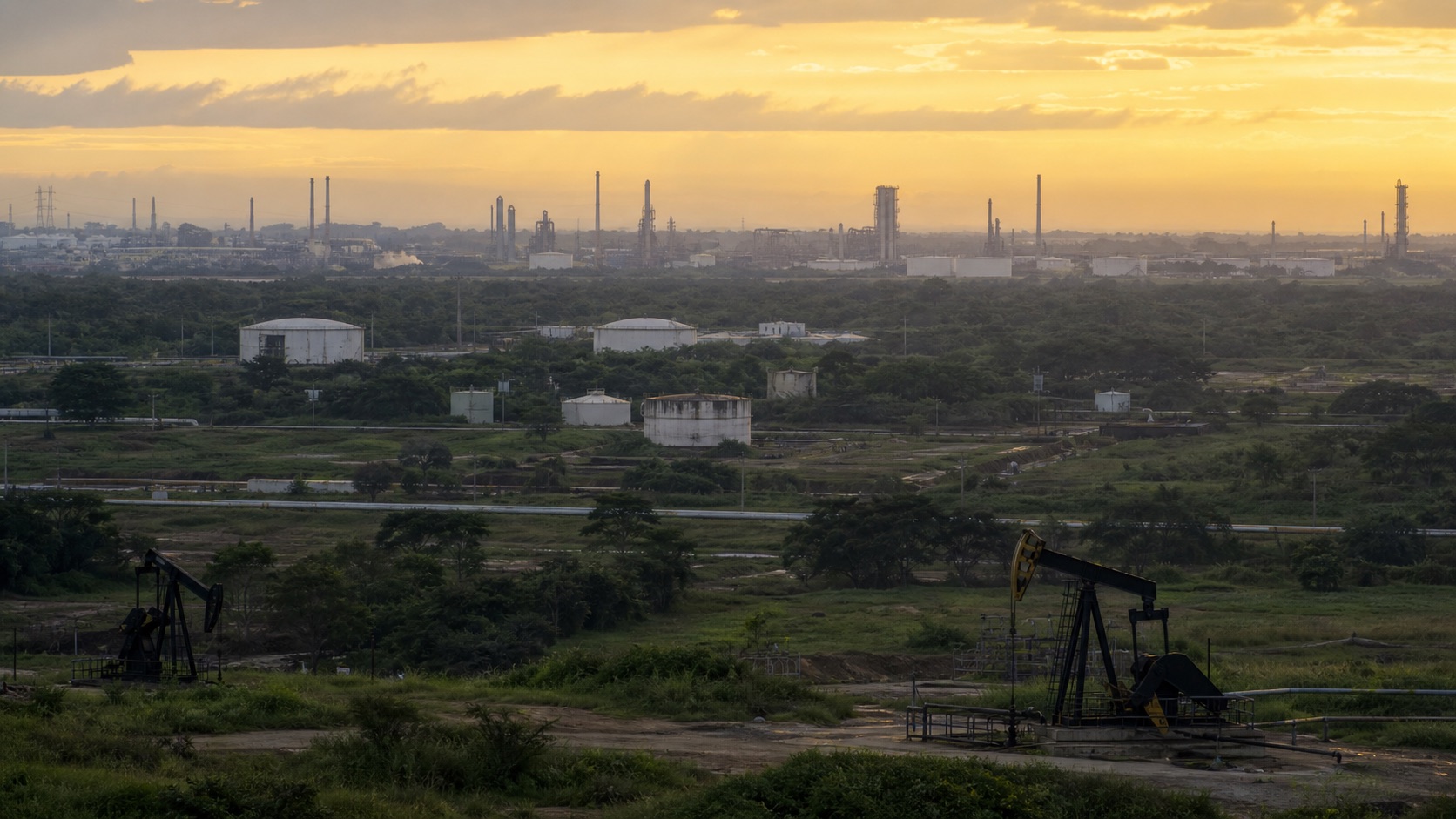
Venezuela holds enormous reserves, but much of its crude is heavy, expensive to develop and dependent on specialized infrastructure. Access to reserves does not create immediate supply. Any meaningful effect on oil prices, U.S. fuel costs or Venezuela's public finances would depend on capital, operating terms, sanctions compliance and years of execution.
The announcement alone does not add barrels to today's market. Traders will need evidence of signed operating agreements, named companies, project financing and a credible production schedule before treating the reserve figure as new supply.
What happened?
Trump said the arrangement covers more than 65 billion barrels of proven reserves. Acting President Delcy Rodríguez's government said it involves 17 fields and could attract $100 billion in investment. Those are government claims, not current production figures or guaranteed investment. The White House has not published the contract or identified the private operator.
Why it matters
Venezuela holds enormous reserves, but much of its crude is heavy, expensive to develop and dependent on specialized infrastructure. Access to reserves does not create immediate supply. Any meaningful effect on oil prices, U.S. fuel costs or Venezuela's public finances would depend on capital, operating terms, sanctions compliance and years of execution.
Background
President Donald Trump and Venezuela's acting government say they have reached an agreement intended to give a U.S.-backed private venture a majority role in developing a large group of Venezuelan oil fields. The full agreement has not been released, leaving its legal structure, financing and production timetable unverified.
What each side says
Trump says the arrangement gives the United States majority control of the covered reserves at no cost to American taxpayers. Rodríguez's government presents it as a route to modernize Venezuela's oil industry and restore economic growth. Neither side has released the complete agreement for independent review.
What happens next
Watch for the contract, the identity of the private operator, the ownership split, financing commitments, field-by-field development plans and any additional Treasury licenses. Those documents will show whether the announcement becomes an operating project and who carries the financial risk.
Nivegu analysis
The gap between the scale of the announcement and the lack of published detail is the central fact. Treasury amended several Venezuela-related licenses on Aug. 27, easing parts of the legal framework for oil transactions, but those licenses do not establish the commercial terms Trump announced the following day. Until the agreement is public, claims about control, cost and future output remain claims by the two governments.
Different viewpoints
If the plan proceeds, companies selected to finance, operate and service the fields could gain long-lived positions in a major oil province. Venezuela's government could receive new investment and tax revenue.
The risks fall on taxpayers or investors if financing promises change, and on Venezuelan citizens if public assets are committed without transparent terms or durable oversight.
What are you still wondering?
Answers will use this briefing and its cited sources.Sources and further reading
01U.S. Treasury OFAC — amended Venezuela-related licenses↗02Associated Press — governments' announcements and unresolved terms↗03Reuters — U.S. announcement and oil-sector context↗Questions, answered.
What is the short version?
President Donald Trump and Venezuela's acting government say they have reached an agreement intended to give a U.S.-backed private venture a majority role in developing a large group of Venezuelan oil fields. The full agreement has not been released, leaving its legal structure, financing and production timetable unverified.
Why does this matter now?
Venezuela holds enormous reserves, but much of its crude is heavy, expensive to develop and dependent on specialized infrastructure. Access to reserves does not create immediate supply. Any meaningful effect on oil prices, U.S. fuel costs or Venezuela's public finances would depend on capital, operating terms, sanctions compliance and years of execution.
What should readers watch next?
The announcement alone does not add barrels to today's market. Traders will need evidence of signed operating agreements, named companies, project financing and a credible production schedule before treating the reserve figure as new supply.