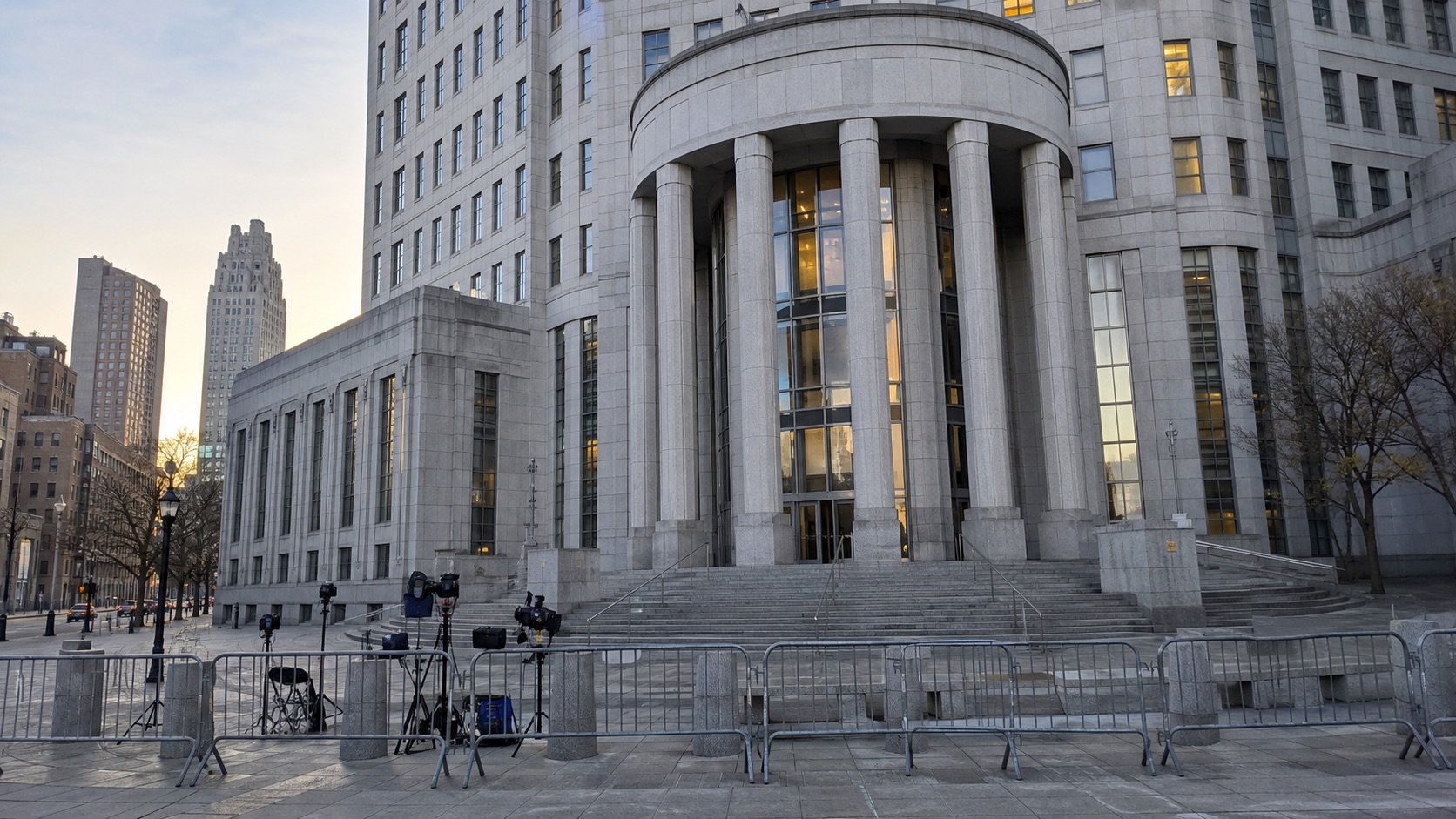
A federal judge in Manhattan has rejected President Donald Trump's renewed attempt to transfer his New York criminal case to federal court. The decision leaves the 2024 conviction on 34 felony counts of falsifying business records in state court, where Trump's separate appeal continues.
Key facts
- Ruling issued: Aug. 28, 2026
- Court: U.S. District Court for the Southern District of New York
- State conviction: 34 felony counts
- Federal transfer request: denied
- New York appeal: still pending
Timeline
May 30, 2024 — a Manhattan jury convicts Trump on 34 counts of falsifying business records. July 1, 2024 — the Supreme Court recognizes immunity for official presidential acts. November 2025 — a federal appeals court directs Hellerstein to reconsider the removal request. Aug. 28, 2026 — Hellerstein again denies transfer to federal court.
Moving the case to federal court could have opened another route for Trump to seek dismissal under the Supreme Court's presidential-immunity doctrine. Hellerstein's decision closes that route for now without deciding Trump's separate challenge to the conviction in New York's appellate courts.
The ruling has no direct market-policy effect. Its significance is legal and political: it narrows one path for challenging the only criminal conviction returned against a sitting U.S. president.
What happened?
U.S. District Judge Alvin Hellerstein ruled that Trump had not shown good cause for filing another removal request after the normal deadline. He also rejected the argument that trial evidence involving former White House aides, a former lawyer and Trump's social-media posts turned the case into one involving protected presidential acts.
Why it matters
Moving the case to federal court could have opened another route for Trump to seek dismissal under the Supreme Court's presidential-immunity doctrine. Hellerstein's decision closes that route for now without deciding Trump's separate challenge to the conviction in New York's appellate courts.
Background
A federal judge in Manhattan has rejected President Donald Trump's renewed attempt to transfer his New York criminal case to federal court. The decision leaves the 2024 conviction on 34 felony counts of falsifying business records in state court, where Trump's separate appeal continues.
What each side says
Trump's legal team called the decision baseless and said the federal and state constitutions, along with the Supreme Court's immunity ruling, require the conviction to be overturned. Manhattan prosecutors argued that the case concerns private conduct and belongs in state court.
What happens next
Trump can seek review of Hellerstein's decision in the federal appeals court. His challenge to the conviction also remains before New York's appellate system. The timing and outcome of either track are unresolved.
Nivegu analysis
The opinion draws a firm line between official presidential conduct and the private conduct at the center of the prosecution. Hellerstein wrote that discussions about a payment to Stormy Daniels and efforts to conceal the matter were not official acts. The ruling does not end Trump's broader effort to overturn the conviction, and it should not be read as a decision on his pending state appeal.
Different viewpoints
Manhattan prosecutors preserved the state court's control over the case at this stage.
Trump did not gain the federal forum his lawyers sought for their immunity challenge.
What are you still wondering?
Answers will use this briefing and its cited sources.Sources and further reading
01U.S. District Court, Southern District of New York — order and opinion↗02Associated Press — ruling and responses↗03Reuters — federal transfer ruling↗Questions, answered.
What is the short version?
A federal judge in Manhattan has rejected President Donald Trump's renewed attempt to transfer his New York criminal case to federal court. The decision leaves the 2024 conviction on 34 felony counts of falsifying business records in state court, where Trump's separate appeal continues.
Why does this matter now?
Moving the case to federal court could have opened another route for Trump to seek dismissal under the Supreme Court's presidential-immunity doctrine. Hellerstein's decision closes that route for now without deciding Trump's separate challenge to the conviction in New York's appellate courts.
What should readers watch next?
The ruling has no direct market-policy effect. Its significance is legal and political: it narrows one path for challenging the only criminal conviction returned against a sitting U.S. president.