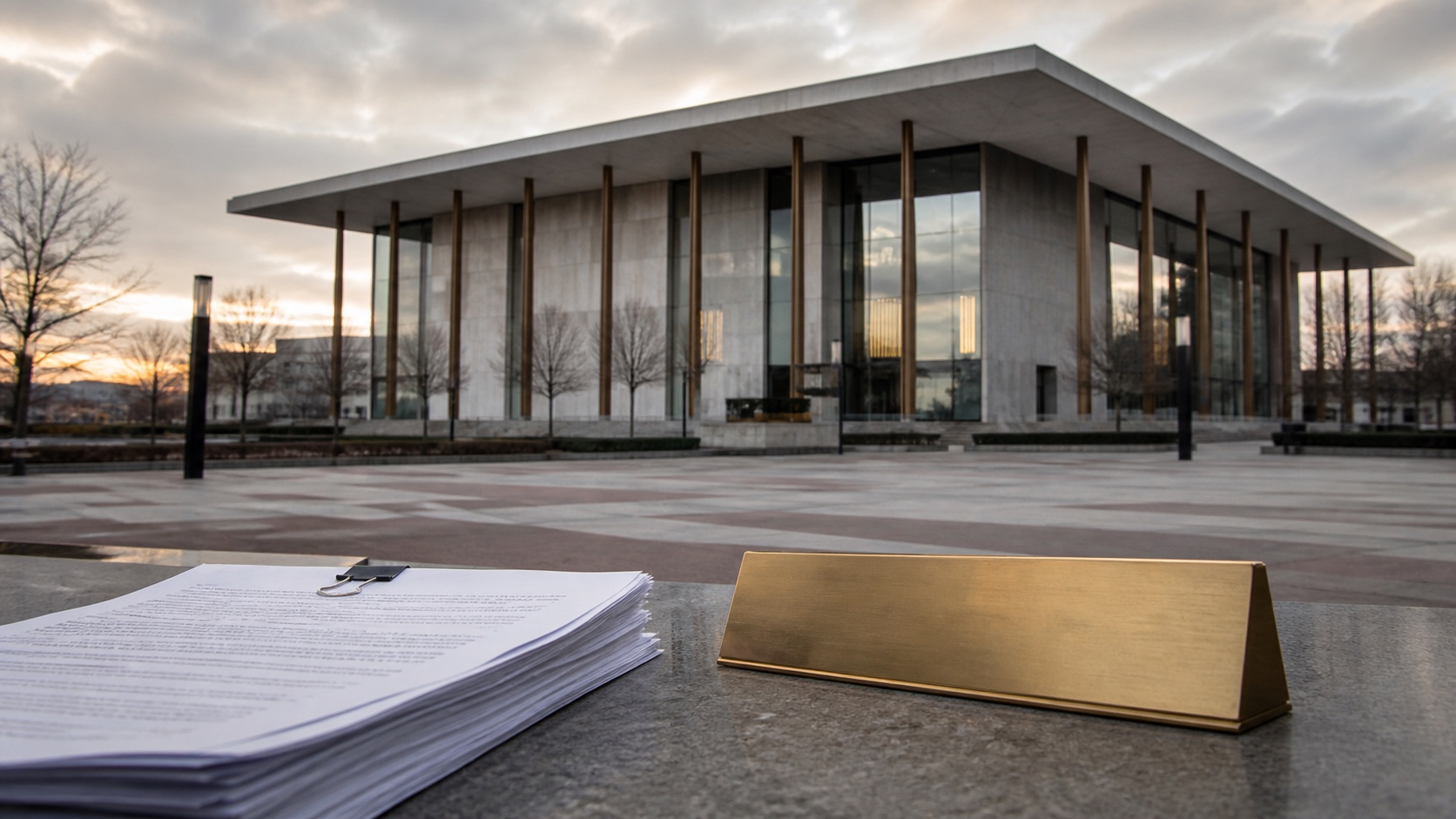
The legal battle over the John F. Kennedy Center for the Performing Arts has returned to federal court. U.S. District Judge Christopher Cooper questioned why the center's board wants to move quickly on a new plan to add President Donald Trump's name to the building, months after Cooper ordered the name removed. No final ruling on the latest plan was announced at Thursday's hearing.
Key facts
- The latest board vote concerns a restoration-and-renovation inscription.
- The May 29 judgment required Trump's name removed from the building and official title.
- The D.C. Circuit declined to stay that judgment in July.
- No final ruling on the latest inscription was announced at the Aug. 27 hearing.
Timeline
May 29, 2026 — Cooper orders Trump's name removed from Kennedy Center signage and the official title. July 8 — the D.C. Circuit declines to pause that order while the appeal proceeds. Aug. 13 — the board approves a new inscription crediting Trump with the restoration and renovation. Aug. 27 — Cooper holds a hearing on Beatty's emergency request and questions the rush. Sept. 8 — the earliest date the center has identified for moving ahead, subject to the court fight.
The case is about more than lettering on a facade. Congress named the institution for President John F. Kennedy, while the current board argues it can recognize Trump for a renovation project. The court must now decide whether the new inscription is meaningfully different from the renaming that it previously barred—and whether it can act while an appeal of the earlier order is pending.
Justice Department lawyers argue that recognizing Trump is tied to fundraising for the renovation and that blocking it could jeopardize donor support. Beatty's lawyers dispute the board's authority and characterize the new vote as an effort to evade the court's ruling. Those are opposing legal claims, not established financial outcomes.
What happened?
The Kennedy Center board voted Aug. 13 to add an inscription crediting Trump with restoring and renovating the building. Representative Joyce Beatty, an ex officio trustee who brought the original lawsuit, asked Cooper to block that move as an attempt to work around his May 29 order. At the Aug. 27 hearing, Cooper pressed Justice Department lawyers about the proposed timetable. The center has said it will not install new signage before Sept. 8 at the earliest while the court considers the dispute.
Why it matters
The case is about more than lettering on a facade. Congress named the institution for President John F. Kennedy, while the current board argues it can recognize Trump for a renovation project. The court must now decide whether the new inscription is meaningfully different from the renaming that it previously barred—and whether it can act while an appeal of the earlier order is pending.
Background
The legal battle over the John F. Kennedy Center for the Performing Arts has returned to federal court. U.S. District Judge Christopher Cooper questioned why the center's board wants to move quickly on a new plan to add President Donald Trump's name to the building, months after Cooper ordered the name removed. No final ruling on the latest plan was announced at Thursday's hearing.
Who wins?
A pause gives the court time to examine the new resolution before the building is altered again. It also gives the public a clearer record of what the board approved and how that action relates to the earlier judgment.
Who loses?
The continuing fight adds uncertainty to an institution already navigating a planned renovation, displaced performances and a separate appeal. Donors, artists and audiences are being asked to plan around decisions that remain contested.
Market impact
Justice Department lawyers argue that recognizing Trump is tied to fundraising for the renovation and that blocking it could jeopardize donor support. Beatty's lawyers dispute the board's authority and characterize the new vote as an effort to evade the court's ruling. Those are opposing legal claims, not established financial outcomes.
Nivegu analysis
The immediate question is narrow: whether the board may install the new inscription while the May judgment and appeal remain active. The broader conflict—who controls the identity, programming and physical future of a congressionally created cultural institution—will outlast this hearing. Until Cooper rules, headlines claiming either side has definitively won the new round go beyond the public record.
Different viewpoints
A pause gives the court time to examine the new resolution before the building is altered again. It also gives the public a clearer record of what the board approved and how that action relates to the earlier judgment.
The continuing fight adds uncertainty to an institution already navigating a planned renovation, displaced performances and a separate appeal. Donors, artists and audiences are being asked to plan around decisions that remain contested.
What are you still wondering?
Answers will use this briefing and its cited sources.Sources and further reading
01U.S. Court of Appeals for the D.C. Circuit — July 8 order↗02Associated Press — Aug. 27 hearing↗03CBS News — federal court hearing and case background↗Questions, answered.
What is the short version?
The legal battle over the John F. Kennedy Center for the Performing Arts has returned to federal court. U.S. District Judge Christopher Cooper questioned why the center's board wants to move quickly on a new plan to add President Donald Trump's name to the building, months after Cooper ordered the name removed. No final ruling on the latest plan was announced at Thursday's hearing.
Why does this matter now?
The case is about more than lettering on a facade. Congress named the institution for President John F. Kennedy, while the current board argues it can recognize Trump for a renovation project. The court must now decide whether the new inscription is meaningfully different from the renaming that it previously barred—and whether it can act while an appeal of the earlier order is pending.
What should readers watch next?
Justice Department lawyers argue that recognizing Trump is tied to fundraising for the renovation and that blocking it could jeopardize donor support. Beatty's lawyers dispute the board's authority and characterize the new vote as an effort to evade the court's ruling. Those are opposing legal claims, not established financial outcomes.