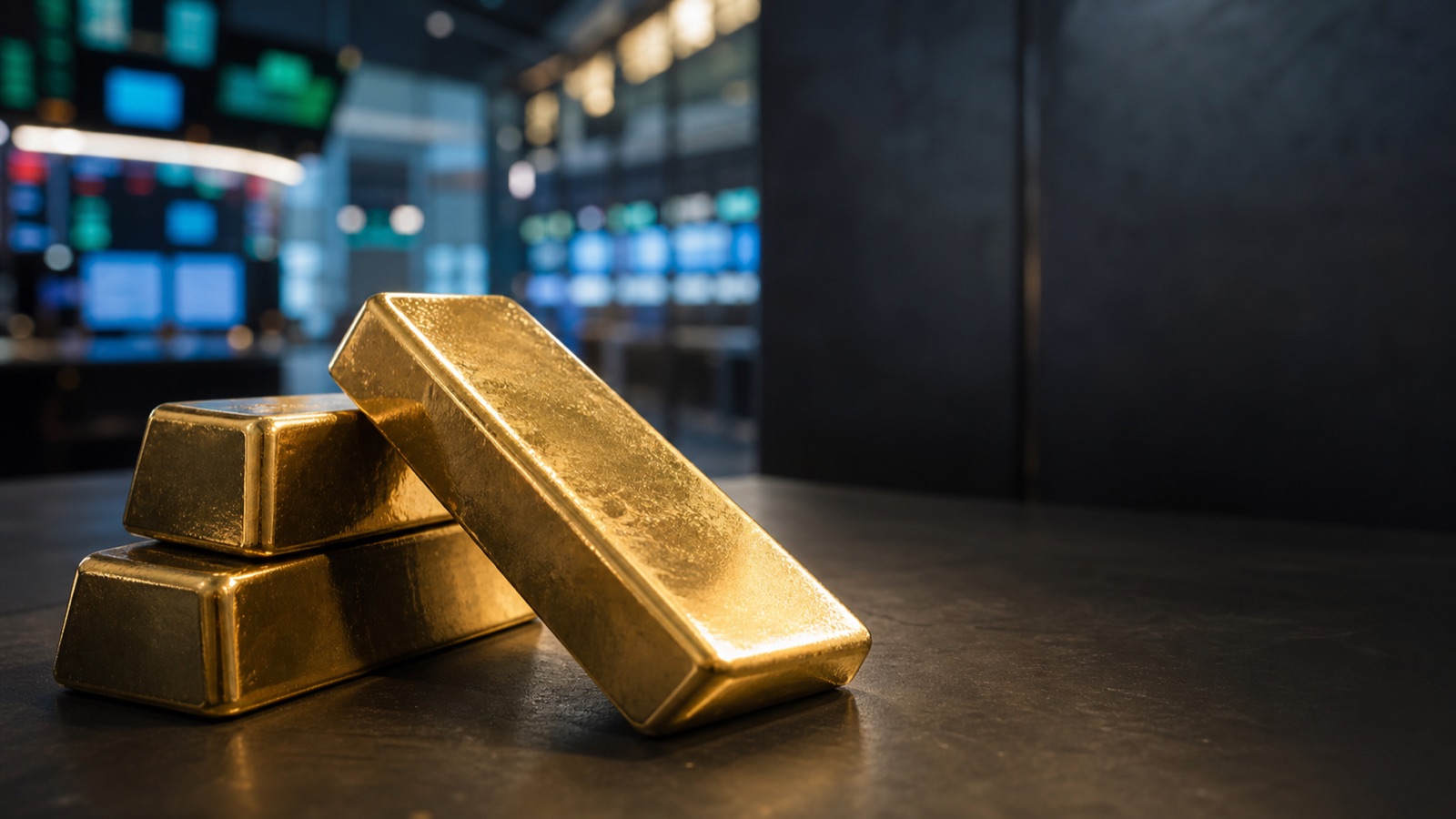
Gold futures moved higher above $4,100 in delayed market data on August 3. That level matters because the World Gold Council’s mid-year outlook used roughly $4,100 an ounce as the center of its second-half base case. The move does not prove a new breakout, but it shows that gold is finding buyers even while the Federal Reserve keeps rates restrictive and inflation elevated.
Timeline
January 2026 — Gold reached a record above $5,500 intraday before reversing. June 17 — The Federal Reserve held its target range at 3.5%–3.75% and said inflation remained elevated. July 1 — The World Gold Council centered its unchanged-conditions second-half scenario around $4,100 an ounce, with a range of roughly plus or minus 5%. August 3 — Delayed futures data moved higher above the $4,100 reference zone.
Gold is often reduced to one rule: real rates up, gold down. The current market is more complicated. Higher rates raise the opportunity cost of holding a non-yielding asset, but they can also increase demand for gold when investors interpret tighter policy as a warning about inflation, financial stress or a policy mistake.
Watch U.S. real yields, the dollar, oil-driven inflation expectations, ETF flows and central-bank demand together. A gold rally that survives rising real yields would carry a different signal from one driven only by a weaker dollar.
What happened?
Gold’s latest rise follows a volatile first half in which the metal set a record, fell below $4,000 and then returned toward the middle of the World Gold Council’s expected second-half range. The Council says the market is being pulled in opposite directions by geopolitical risk, investor positioning, the dollar and the prospect of further central-bank tightening.
Why it matters
Gold is often reduced to one rule: real rates up, gold down. The current market is more complicated. Higher rates raise the opportunity cost of holding a non-yielding asset, but they can also increase demand for gold when investors interpret tighter policy as a warning about inflation, financial stress or a policy mistake.
Background
Gold futures moved higher above $4,100 in delayed market data on August 3. That level matters because the World Gold Council’s mid-year outlook used roughly $4,100 an ounce as the center of its second-half base case. The move does not prove a new breakout, but it shows that gold is finding buyers even while the Federal Reserve keeps rates restrictive and inflation elevated.
What each side says
The bullish case points to geopolitical risk, persistent inflation, central-bank demand and gold’s return above the $4,100 reference zone. The cautious case points to restrictive real rates, the possibility of a stronger dollar and a market that remains below its early-2026 record. Both sides are watching whether buying continues after the first headline move.
What happens next
The next durable signal will come from the combination of inflation and labor data, Fed communication, movements in real yields and published ETF-flow data. Nivegu’s metal cards use delayed quotes and should be read as market context, not an execution price.
Nivegu analysis
The strongest conclusion is not that rate hikes are bullish for gold. It is that the rate-only model is incomplete. World Gold Council research finds that gold’s response to past Fed hikes has been mixed. When tightening looks orderly, higher yields can hurt gold. When tightening exposes fragility, the same policy can strengthen demand for insurance.
Different viewpoints
Existing diversified holders and gold producers benefit from higher prices, while central banks and long-term buyers gain evidence that demand remains broad. A rising session is not, by itself, a recommendation to buy.
Late leveraged traders face the greatest risk if the move reverses. Jewelry buyers and manufacturers also absorb higher input costs. Anyone treating $4,100 as a guaranteed floor is confusing a reference level with protection.
What are you still wondering?
Answers will use this briefing and its cited sources.Sources and further reading
01World Gold Council — Gold Mid-Year Outlook 2026↗02World Gold Council — Gold Market Commentary, May 2026↗03Federal Reserve — June 2026 FOMC statement↗04Federal Reserve — July 2026 Monetary Policy Report summary↗05Gold futures — delayed market quote↗Questions, answered.
What is the short version?
Gold futures moved higher above $4,100 in delayed market data on August 3. That level matters because the World Gold Council’s mid-year outlook used roughly $4,100 an ounce as the center of its second-half base case. The move does not prove a new breakout, but it shows that gold is finding buyers even while the Federal Reserve keeps rates restrictive and inflation elevated.
Why does this matter now?
Gold is often reduced to one rule: real rates up, gold down. The current market is more complicated. Higher rates raise the opportunity cost of holding a non-yielding asset, but they can also increase demand for gold when investors interpret tighter policy as a warning about inflation, financial stress or a policy mistake.
What should readers watch next?
Watch U.S. real yields, the dollar, oil-driven inflation expectations, ETF flows and central-bank demand together. A gold rally that survives rising real yields would carry a different signal from one driven only by a weaker dollar.