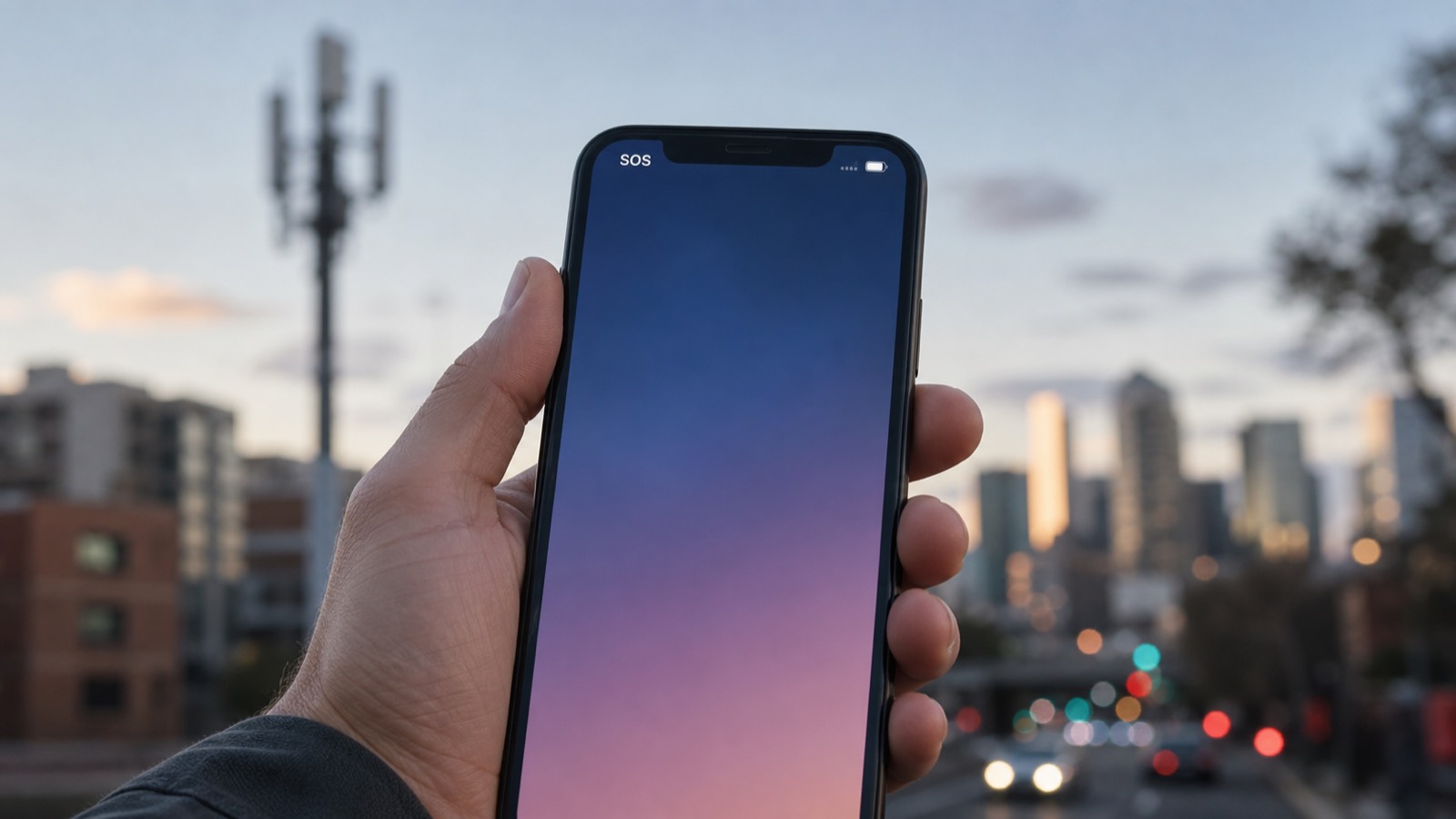
U.S. searches for a T-Mobile outage and phones showing SOS rose sharply on August 4. The search spike is a useful signal that many people are looking for an explanation, but it is not proof of one nationwide event. Apple says SOS or SOS only means an iPhone is not connected to its normal cellular network; emergency calls may still route through another available carrier network.
Key facts
- ‘SOS’ means the iPhone is not connected to its normal cellular network.
- Emergency calls may still route through another available carrier network.
- The icon alone cannot identify a device, account, local coverage or carrier-network cause.
Timeline
August 4, 2026 — U.S. searches for a T-Mobile outage and SOS service questions surged. Apple’s current support guidance distinguishes the SOS cellular status from Emergency SOS via satellite. T-Mobile’s outage guidance says restoration notices can be local and advises customers to power-cycle devices after service is restored.
A cellular warning becomes especially important when someone needs to make a call, receive authentication messages or reach emergency services. The fastest useful response is to identify the connection state, check official carrier information and try the limited troubleshooting steps the phone maker and carrier recommend—not to treat one screenshot as a diagnosis.
Watch T-Mobile’s official outage guidance and local account notifications for confirmation. A large search spike can reveal widespread concern, but carrier scope, affected services, geography and restoration time require official or independently verified evidence.
What happened?
Google Trends recorded a rapid rise in U.S. searches related to a T-Mobile outage. Nivegu did not find an official notice confirming that every report belongs to a single nationwide failure. The same phone status can appear because of local coverage, maintenance, an account problem, a device or SIM issue, or a carrier outage.
Why it matters
A cellular warning becomes especially important when someone needs to make a call, receive authentication messages or reach emergency services. The fastest useful response is to identify the connection state, check official carrier information and try the limited troubleshooting steps the phone maker and carrier recommend—not to treat one screenshot as a diagnosis.
Background
U.S. searches for a T-Mobile outage and phones showing SOS rose sharply on August 4. The search spike is a useful signal that many people are looking for an explanation, but it is not proof of one nationwide event. Apple says SOS or SOS only means an iPhone is not connected to its normal cellular network; emergency calls may still route through another available carrier network.
What each side says
Apple says SOS or SOS only means the iPhone is not connected to its cellular network, although emergency calls may still be possible through another carrier. T-Mobile says outages may result from planned tower maintenance or unforeseen circumstances and recommends Wi-Fi Calling when available. Google Trends measures search attention, not network health.
What happens next
Turn Airplane Mode on for at least 15 seconds and turn it off, then restart the phone. If Wi-Fi is available, use Wi-Fi Calling where supported. Check the carrier account and official local outage information. If service does not return, contact the carrier; for an emergency, follow the phone’s emergency-call options rather than relying on ordinary cellular service.
Nivegu analysis
The SOS label is a connection state, not a root-cause report. Apple defines what the phone can see; T-Mobile explains how customers should respond to network disruption. Neither turns a Google Trends spike into proof of a nationwide incident. The responsible conclusion is narrower: many users are searching, and the icon alone cannot tell them why.
Different viewpoints
Users who separate the visible symptom from its possible causes can act faster: preserve Wi-Fi access, check the account and local carrier notices, and keep emergency-call options in mind.
People who assume an SOS icon proves a national outage may wait when the problem is actually local to the device, SIM, account or immediate coverage area. Unverified outage posts can also obscure the steps that restore service.
What are you still wondering?
Answers will use this briefing and its cited sources.Sources and further reading
01Apple Support — If you see SOS, No Service or Searching↗02T-Mobile Support — Network outages↗03Apple iPhone User Guide — Emergency SOS via satellite↗04Google Trends — United States↗Questions, answered.
What is the short version?
U.S. searches for a T-Mobile outage and phones showing SOS rose sharply on August 4. The search spike is a useful signal that many people are looking for an explanation, but it is not proof of one nationwide event. Apple says SOS or SOS only means an iPhone is not connected to its normal cellular network; emergency calls may still route through another available carrier network.
Why does this matter now?
A cellular warning becomes especially important when someone needs to make a call, receive authentication messages or reach emergency services. The fastest useful response is to identify the connection state, check official carrier information and try the limited troubleshooting steps the phone maker and carrier recommend—not to treat one screenshot as a diagnosis.
What should readers watch next?
Watch T-Mobile’s official outage guidance and local account notifications for confirmation. A large search spike can reveal widespread concern, but carrier scope, affected services, geography and restoration time require official or independently verified evidence.