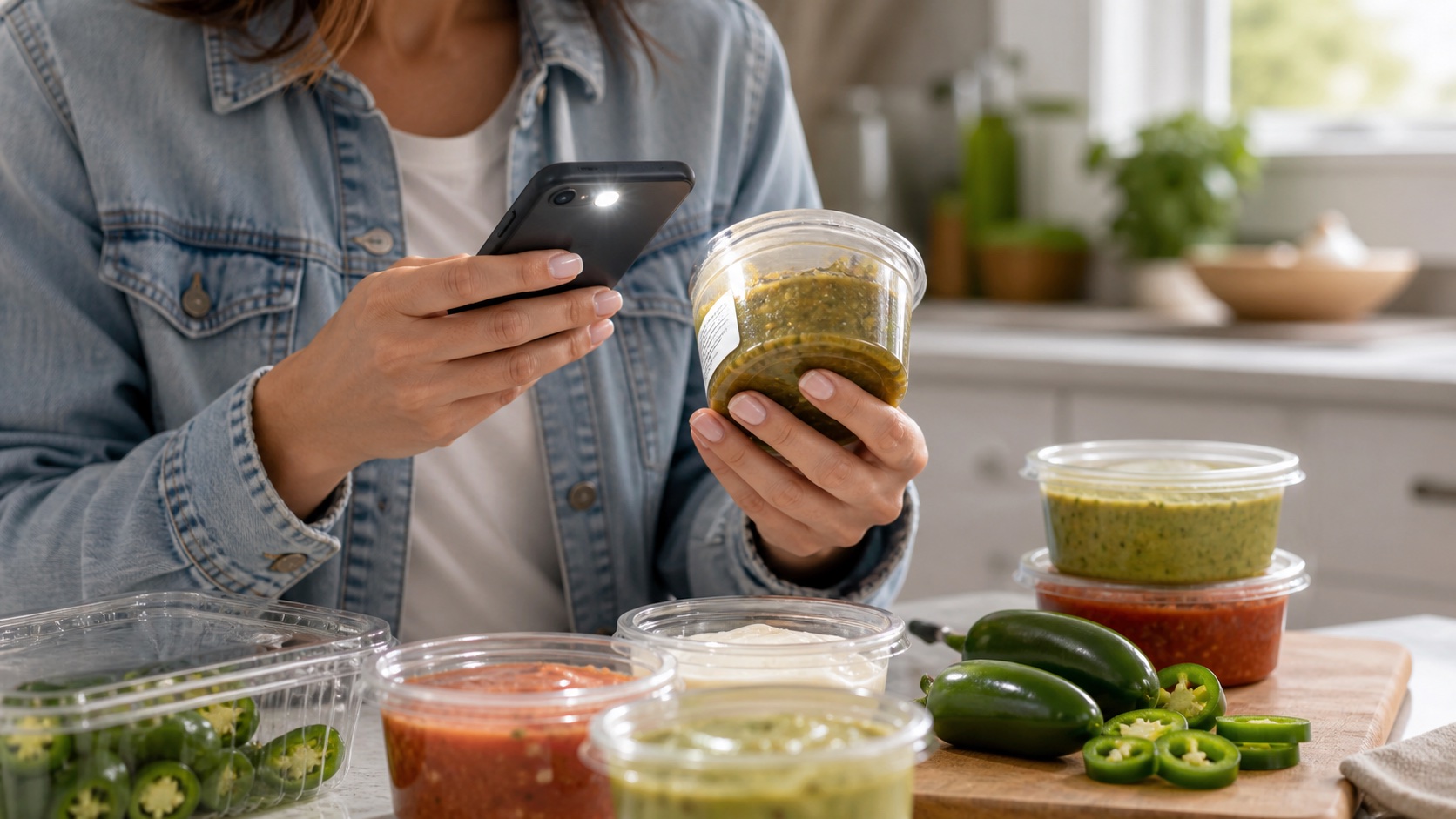
Taylor Fresh Foods recalled a defined group of prepared foods made with jalapeños supplied through Coast Citrus Distributors because of possible Salmonella contamination. The FDA-posted notice lists store, brand, product, UPC, date and state combinations. Consumers should match all of those fields rather than discard every salsa, dip or jalapeño product.
Key facts
- Match the store or brand, exact product, UPC, date and state
- Taylor notice distribution: 26 states, varying by product
- Latest listed best-if-used-by date: Aug. 16, 2026
- Company instruction: discard matching recalled products and do not consume
- Taylor reported no known illnesses linked specifically to its finished products at announcement
Timeline
July 20 — Chipotle completes a nationwide supplier change for jalapeños. July 28 — QDOBA stops serving jalapeños from the implicated supply. Aug. 5 — FDA reports 345 illnesses, 36 hospitalizations and no deaths in the broader outbreak investigation. Aug. 9 — Taylor Fresh Foods announces its downstream recall. Aug. 10 — FDA posts an updated outbreak notice. Aug. 16 — latest best-if-used-by date in the Taylor product table.
The product table is the safety instruction. A retailer name alone is not enough because each row has its own description, UPC, date range and distribution footprint. The recall also sits downstream from a broader fresh-jalapeño investigation, so consumers and food businesses may encounter separate notices covering other companies or products.
The company notice does not provide a financial estimate. The operational scope includes alternative sourcing, retail removals and refunds, but Nivegu found no official cost figure in the FDA documents reviewed.
What happened?
Taylor Fresh Foods issued the recall after Coast Citrus Distributors recalled fresh jalapeños tied to an ongoing FDA investigation. The affected Taylor items include selected diced jalapeños, burritos, sandwiches, dips, pico de gallo, salsa, guacamole and one salad product sold through several retailers. Listed best-if-used-by dates run from Aug. 7 through Aug. 16, depending on the item. Distribution in the Taylor notice spans 26 states, but individual products reached narrower groups of states.
Why it matters
The product table is the safety instruction. A retailer name alone is not enough because each row has its own description, UPC, date range and distribution footprint. The recall also sits downstream from a broader fresh-jalapeño investigation, so consumers and food businesses may encounter separate notices covering other companies or products.
Background
Taylor Fresh Foods recalled a defined group of prepared foods made with jalapeños supplied through Coast Citrus Distributors because of possible Salmonella contamination. The FDA-posted notice lists store, brand, product, UPC, date and state combinations. Consumers should match all of those fields rather than discard every salsa, dip or jalapeño product.
What each side says
Taylor Fresh Foods said it stopped sourcing from the implicated grower, moved to alternative suppliers and was not aware of reported illnesses tied to its finished products. FDA says the broader Salmonella Javiana investigation is ongoing and advises consumers not to eat, serve or sell recalled fresh jalapeños from Sinaloa, Mexico distributed by Coast Citrus Distributors. FDA also says Chipotle and QDOBA had already changed or stopped the implicated supply and were not considered a current ongoing risk in this outbreak at the time of its advisory.
What happens next
Consumers should open the FDA recall notice and compare the package against the exact product table. A matching item should be discarded immediately and not consumed; refunds are available at the place of purchase. Anyone with possible Salmonella symptoms after exposure should contact a healthcare provider. FDA may update the outbreak advisory and post additional downstream recalls as distribution tracing continues.
Nivegu analysis
This is a targeted recall, not evidence that every Taylor Farms item, every retailer location or every jalapeño is unsafe. The safest interpretation is row by row: store or brand, exact product, UPC, best-if-used-by date and state must align with the official table. Taylor said it was not aware of illnesses linked specifically to its recalled finished products when the notice was issued; that statement does not erase the broader outbreak investigation linked to the supplier's fresh jalapeños.
Different viewpoints
Consumers who still have a listed refrigerated product can identify it precisely and discard it or seek a refund. Retailers and suppliers gain a traceable list for removing affected inventory and cleaning food-contact surfaces.
Households may lose recalled food and retailers face disposal and replacement costs. People at higher risk of severe Salmonella infection—including young children, older adults and people with weakened immune systems—face the greatest health consequences if contaminated food is consumed.
What are you still wondering?
Answers will use this briefing and its cited sources.Sources and further reading
01FDA — Taylor Fresh Foods recall notice↗02FDA — Jalapeño Salmonella outbreak investigation↗03FDA — Active foodborne-illness investigations↗Questions, answered.
What is the short version?
Taylor Fresh Foods recalled a defined group of prepared foods made with jalapeños supplied through Coast Citrus Distributors because of possible Salmonella contamination. The FDA-posted notice lists store, brand, product, UPC, date and state combinations. Consumers should match all of those fields rather than discard every salsa, dip or jalapeño product.
Why does this matter now?
The product table is the safety instruction. A retailer name alone is not enough because each row has its own description, UPC, date range and distribution footprint. The recall also sits downstream from a broader fresh-jalapeño investigation, so consumers and food businesses may encounter separate notices covering other companies or products.
What should readers watch next?
The company notice does not provide a financial estimate. The operational scope includes alternative sourcing, retail removals and refunds, but Nivegu found no official cost figure in the FDA documents reviewed.