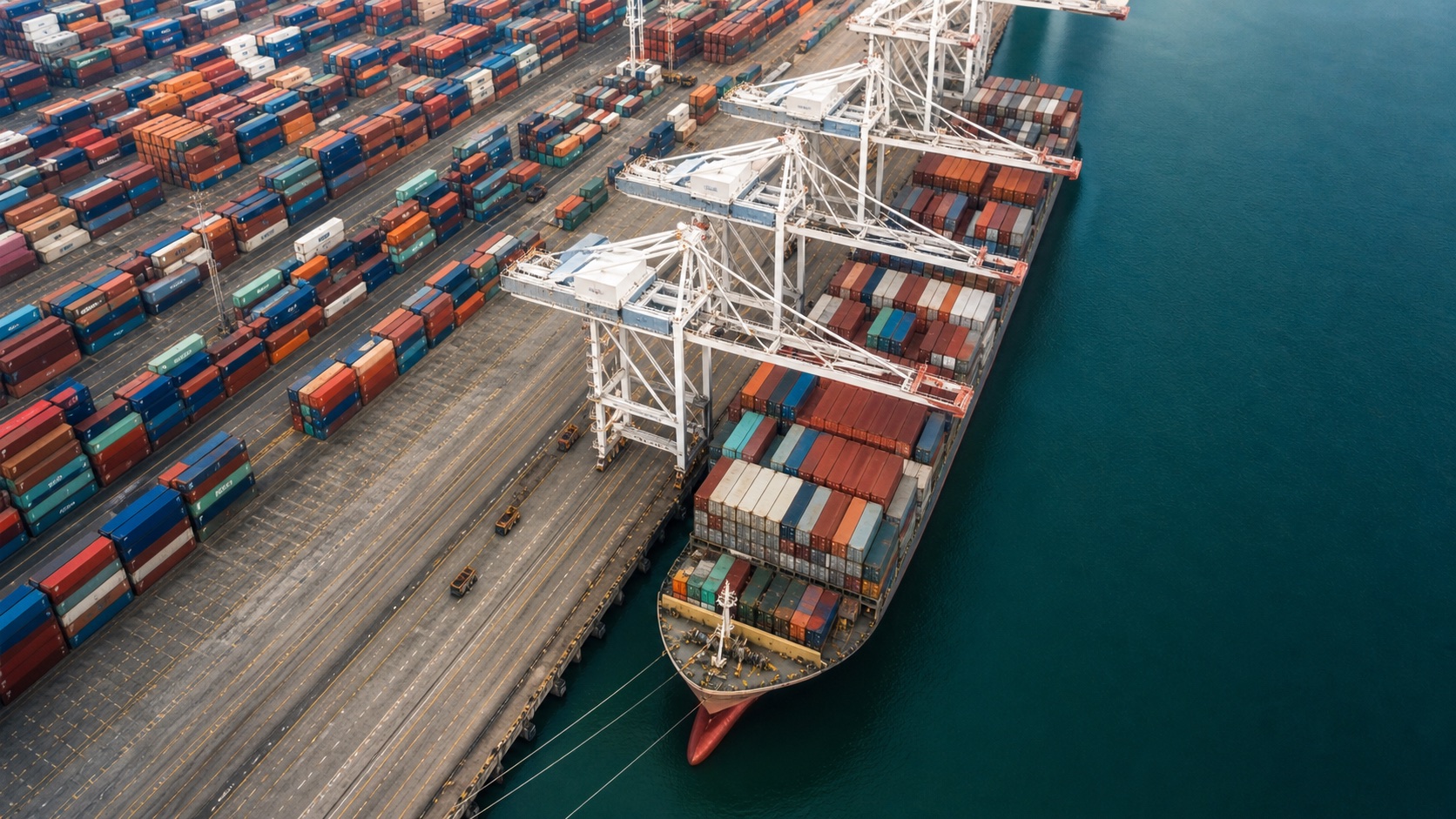
Port congestion raises the time and uncertainty involved in moving containers through a network.
Timeline
Vessels, terminals, railroads, truckers and warehouses must synchronize. A disruption at one node can consume capacity elsewhere and complicate equipment flows.
Businesses respond with more inventory, alternative routes or higher transport spending—costs that can reach consumers.
Watch vessel queues, dwell times, chassis availability, labor conditions and inland rail performance.
What happened?
Vessels, terminals, railroads, truckers and warehouses must synchronize. A disruption at one node can consume capacity elsewhere and complicate equipment flows.
Why it matters
Businesses respond with more inventory, alternative routes or higher transport spending—costs that can reach consumers.
Background
Port congestion raises the time and uncertainty involved in moving containers through a network.
Who wins?
Readers who need source-linked context rather than a headline alone.
Who loses?
Simplistic narratives that omit operational constraints and trade-offs.
Market impact
Watch vessel queues, dwell times, chassis availability, labor conditions and inland rail performance.
Nivegu analysis
The visible queue is only the surface. The larger economic cost is the uncertainty that forces every participant to hold more buffer.
Different viewpoints
Readers who need source-linked context rather than a headline alone.
Simplistic narratives that omit operational constraints and trade-offs.
What are you still wondering?
Answers will use this briefing and its cited sources.Sources and further reading
01Federal Maritime Commission — Supply Chain↗02BTS — Port Performance Freight Statistics↗Questions, answered.
What is the short version?
Port congestion raises the time and uncertainty involved in moving containers through a network.
Why does this matter now?
Businesses respond with more inventory, alternative routes or higher transport spending—costs that can reach consumers.
What should readers watch next?
Watch vessel queues, dwell times, chassis availability, labor conditions and inland rail performance.