The Federal Aviation Administration announced $481 million for 191 airport infrastructure projects across 36 states and two U.S. territories. The largest named award is $100 million for runway, taxiway, terminal and runway-safety-area work at Hartsfield-Jackson Atlanta International Airport. Louisville and San Diego receive the next two largest grants highlighted by the agency.
Key facts
- $481 million covers 191 projects in 36 states and two territories.
- Atlanta receives the largest highlighted award: $100 million.
- Louisville receives $32.5 million and San Diego receives $30.3 million for terminal work.
- Milwaukee receives $14.2 million for taxiway work; El Paso receives $8.7 million for apron rehabilitation.
Timeline
September 3, 2026 — the FAA announces $481 million for 191 Airport Infrastructure Grant projects. Next — recipient airports publish procurement and construction milestones. Later — operational or passenger benefits can be assessed only as the funded work enters service.
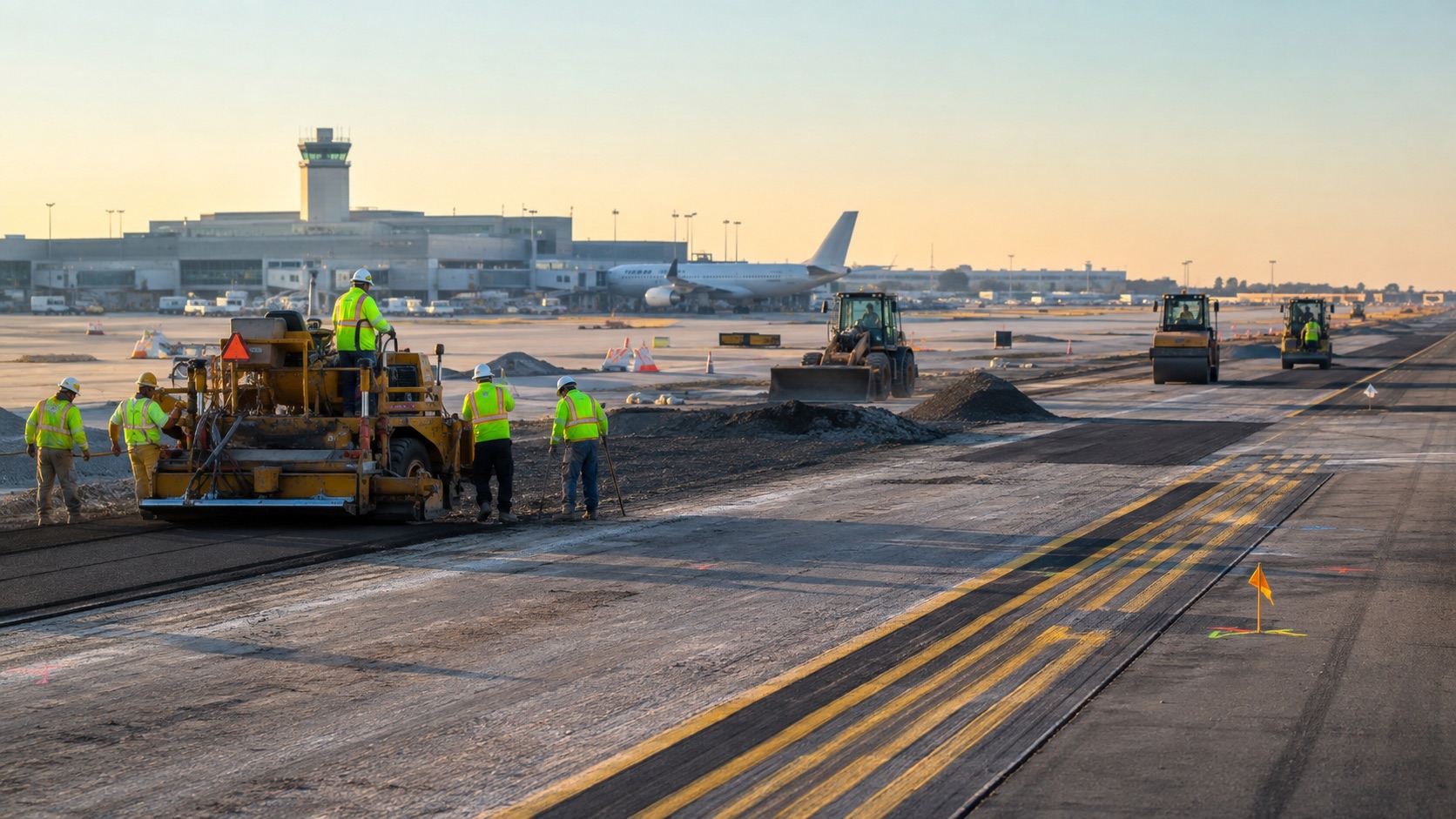
Airport projects are easy to describe as one large construction total, but the passenger impact depends on what each grant buys. Runway and taxiway work can protect capacity and reduce operational constraints; terminal work changes the space through which travelers move; apron rehabilitation supports the areas where aircraft park, load and turn. The awards therefore address different bottlenecks rather than funding one national megaproject.
The next useful signals are project schedules, airport procurement notices and construction phasing—not the headline total alone. Each airport will determine when work begins and how it affects gates, roads, taxiways or operating windows. Nivegu will track material milestones on the relevant airport pages as they are published.
What happened?
The FAA released the latest round of Airport Infrastructure Grants on September 3. Atlanta receives $100 million for a package of airfield and terminal reconstruction. Louisville Muhammad Ali International Airport receives $32.5 million for terminal reconstruction, and San Diego International Airport receives $30.3 million for terminal construction. Milwaukee receives $14.2 million for taxiway work, while El Paso receives $8.7 million to rehabilitate an apron.
Why it matters
Airport projects are easy to describe as one large construction total, but the passenger impact depends on what each grant buys. Runway and taxiway work can protect capacity and reduce operational constraints; terminal work changes the space through which travelers move; apron rehabilitation supports the areas where aircraft park, load and turn. The awards therefore address different bottlenecks rather than funding one national megaproject.
Background
The Federal Aviation Administration announced $481 million for 191 airport infrastructure projects across 36 states and two U.S. territories. The largest named award is $100 million for runway, taxiway, terminal and runway-safety-area work at Hartsfield-Jackson Atlanta International Airport. Louisville and San Diego receive the next two largest grants highlighted by the agency.
Who wins?
Airports with mature, construction-ready projects gain federal capital for work that is difficult to postpone indefinitely. Passengers and airlines benefit when safety areas, pavement and terminal systems keep pace with traffic, although those benefits arrive over the life of the completed asset rather than on announcement day.
Who loses?
Travelers may encounter temporary construction phasing before seeing the benefit, and airports outside this round must continue competing for finite federal funds. A grant also does not eliminate local planning, procurement or delivery risk.
Market impact
The next useful signals are project schedules, airport procurement notices and construction phasing—not the headline total alone. Each airport will determine when work begins and how it affects gates, roads, taxiways or operating windows. Nivegu will track material milestones on the relevant airport pages as they are published.
Nivegu analysis
The most important distinction is between an award and a finished improvement. The FAA has allocated money to defined project categories; it has not promised that every traveler will notice an immediate change. Readers should judge the program airport by airport, using the scope, delivery schedule and operational constraint each project is meant to address.
Different viewpoints
Airports with mature, construction-ready projects gain federal capital for work that is difficult to postpone indefinitely. Passengers and airlines benefit when safety areas, pavement and terminal systems keep pace with traffic, although those benefits arrive over the life of the completed asset rather than on announcement day.
Travelers may encounter temporary construction phasing before seeing the benefit, and airports outside this round must continue competing for finite federal funds. A grant also does not eliminate local planning, procurement or delivery risk.
What are you still wondering?
Answers will use this briefing and its cited sources.Sources and further reading
01FAA — $481 million in Airport Infrastructure Grants↗02Aviation Week — Airport Updates, week of September 7↗Questions, answered.
What is the short version?
The Federal Aviation Administration announced $481 million for 191 airport infrastructure projects across 36 states and two U.S. territories. The largest named award is $100 million for runway, taxiway, terminal and runway-safety-area work at Hartsfield-Jackson Atlanta International Airport. Louisville and San Diego receive the next two largest grants highlighted by the agency.
Why does this matter now?
Airport projects are easy to describe as one large construction total, but the passenger impact depends on what each grant buys. Runway and taxiway work can protect capacity and reduce operational constraints; terminal work changes the space through which travelers move; apron rehabilitation supports the areas where aircraft park, load and turn. The awards therefore address different bottlenecks rather than funding one national megaproject.
What should readers watch next?
The next useful signals are project schedules, airport procurement notices and construction phasing—not the headline total alone. Each airport will determine when work begins and how it affects gates, roads, taxiways or operating windows. Nivegu will track material milestones on the relevant airport pages as they are published.