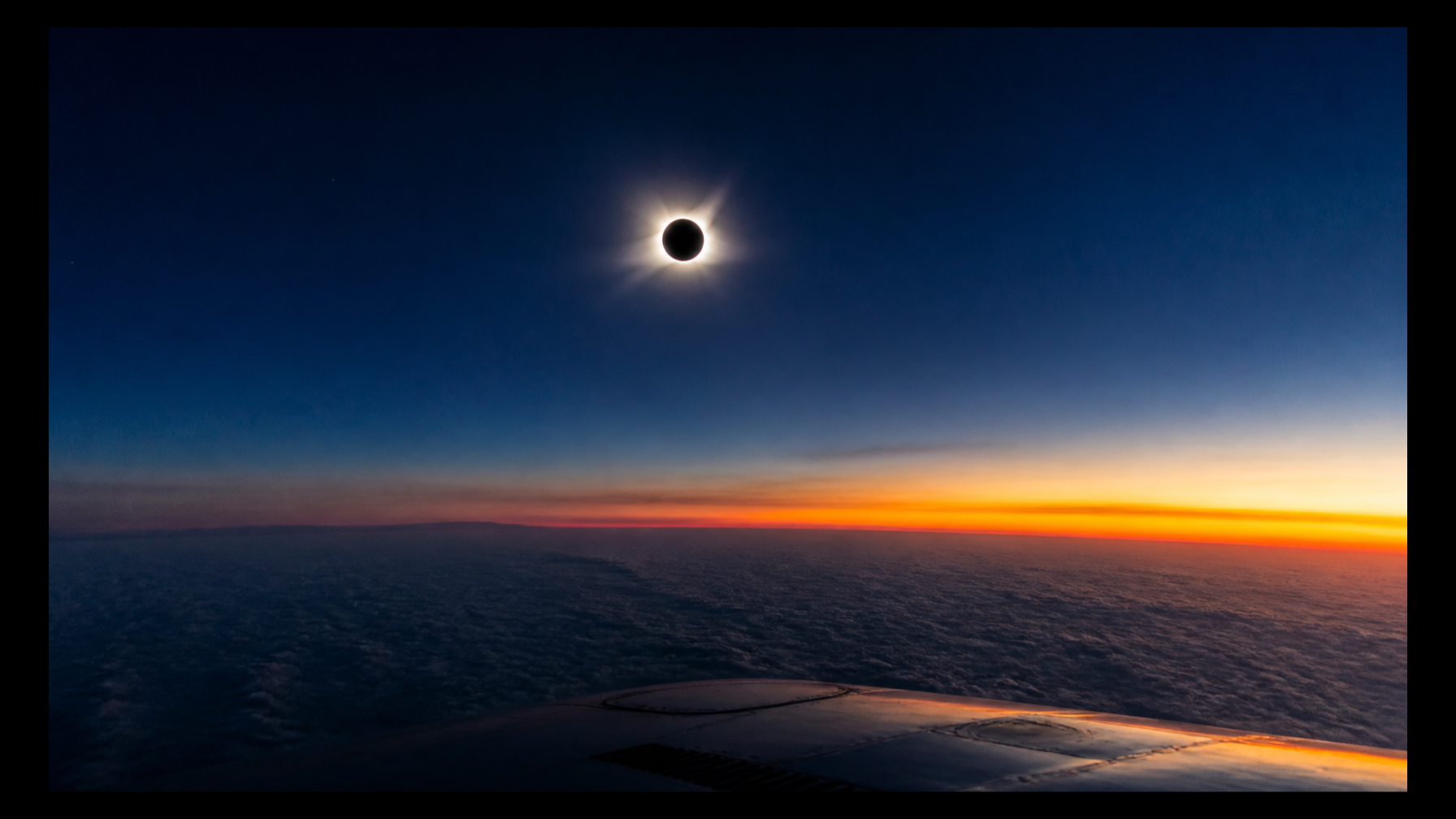
The Aug. 12, 2026 eclipse was more than a spectacle. NASA-backed teams used a WB-57 aircraft and scientific balloons to observe the solar corona and measure how the atmosphere responds when daylight abruptly falls, turning a brief shadow into a coordinated research window.
Key facts
- Totality crossed parts of Russia, Greenland, Iceland, Spain and Portugal
- NASA used a WB-57 high-altitude aircraft to observe the eclipse
- Student teams launched research balloons from Iceland and Spain
- Partial phases always require proper solar eye protection
Timeline
July 27 — NASA details its aircraft and balloon research plans. July 29 — the agency publishes its broadcast schedule. Aug. 12 — totality crosses the North Atlantic region and NASA conducts live coverage and field research. Aug. 13 — teams begin the longer work of reviewing the observations.
A total eclipse temporarily removes the Sun's bright disk and exposes the faint corona from Earth. That lets researchers examine structures that are otherwise difficult to isolate. The sudden loss and return of sunlight also creates a natural experiment for measuring short-term changes in the atmosphere.
The event is primarily scientific rather than commercial. Its durable value lies in the observations and student research records, not in treating eclipse tourism as a proxy for the science.
What happened?
The path of totality crossed parts of northern Russia, Greenland, Iceland, Spain and a small corner of Portugal. NASA began live coverage at 1:15 p.m. Eastern, while a high-altitude WB-57 aircraft pursued the Moon's shadow and student teams launched balloons from Iceland and Spain. Outside the narrow totality path, a partial eclipse was visible across broad parts of North America, Europe and northwestern Africa.
Why it matters
A total eclipse temporarily removes the Sun's bright disk and exposes the faint corona from Earth. That lets researchers examine structures that are otherwise difficult to isolate. The sudden loss and return of sunlight also creates a natural experiment for measuring short-term changes in the atmosphere.
Background
The Aug. 12, 2026 eclipse was more than a spectacle. NASA-backed teams used a WB-57 aircraft and scientific balloons to observe the solar corona and measure how the atmosphere responds when daylight abruptly falls, turning a brief shadow into a coordinated research window.
What each side says
NASA described the eclipse as an opportunity to study the corona and Earth's atmospheric response. The agency also stressed that direct viewing is safe only during the brief total phase; partial phases require proper eclipse glasses, a handheld solar viewer or an indirect method.
What happens next
Research teams will process imagery and balloon measurements before publishing scientific conclusions. NASA's eclipse calendar lists the next total solar eclipse for Aug. 2, 2027, crossing parts of southern Europe, North Africa and the Middle East.
Nivegu analysis
The essential distinction is between seeing an eclipse and using one. NASA's aircraft and balloon program was designed around the seconds of totality and the atmospheric transition before and after it. The research questions will take longer to answer than the shadow took to cross the Atlantic.
Different viewpoints
Solar physicists gained a rare observing window above much of the weather, and student balloon teams collected atmospheric measurements under an unusual but precisely timed condition.
Cloud cover could still limit ground observations, and viewers outside totality had to keep certified solar protection on throughout the event.
What are you still wondering?
Answers will use this briefing and its cited sources.Sources and further reading
01NASA — Total Solar Eclipse on August 12, 2026↗02NASA — Science Soars During August Total Solar Eclipse↗03NASA — Eclipse coverage advisory↗Questions, answered.
What is the short version?
The Aug. 12, 2026 eclipse was more than a spectacle. NASA-backed teams used a WB-57 aircraft and scientific balloons to observe the solar corona and measure how the atmosphere responds when daylight abruptly falls, turning a brief shadow into a coordinated research window.
Why does this matter now?
A total eclipse temporarily removes the Sun's bright disk and exposes the faint corona from Earth. That lets researchers examine structures that are otherwise difficult to isolate. The sudden loss and return of sunlight also creates a natural experiment for measuring short-term changes in the atmosphere.
What should readers watch next?
The event is primarily scientific rather than commercial. Its durable value lies in the observations and student research records, not in treating eclipse tourism as a proxy for the science.